


Why Negative Rate is a better policy tool to Higher Inflation Target? Bernanke Explains…
In his latest Brookings blog post "Modifying the Fed’s policy framework: Does a higher inflation target beat negative interest rates?", Ben Bernanke compares two...

Federal Reserve has never been this ‘confused’ about neutral rate
Federal Reserve decided to cut rate by an supersized 0.5 percentage point. The decision finally ended the weeks-long market debate of whether the central bank would cut 25 or 50 basis points. One important thing, though, didn't reach the headline: The Fed has never been this "confused" about where the natural rate should be.
A skeptical review of the QEs – why they might not be powerful as...
In their working paper "A Skeptical View of the Impact of the Fed's Balance Sheet," economists David Greenlaw, James D. Hamilton, Ethan Harris, and Kenneth D. West challenge some earlier studies that concluded QEs have a significant economic impact. Their major argument is that those research used simple event studies to quantify the impact of QE.

Measuring Federal Reserve officials’ secret disagreement behind locked doors of FOMC meetings
Dissent votes in Federal Reserve policy meetings are rare, accounting for only 6.37% of the votes between 1976 and 2017. However, opting not to vote against the FOMC consensus doesn't necessarily mean committee members don't "disagree" with it.

Why is the Hong Kong-US interest rate spread so persistent? — Currency peg in...
A spread of over 3.5 percentage points between US and Hong Kong Interest rate persisted for close to two months and so far arbitrage has failed to close the gap, leading to discussion of whether Hong Kong's Linked Exchange System is failing. This article, however, will explore some technical factors behind this interesting interest rate gap.
No, PPI is not a measure of wholesale inflation
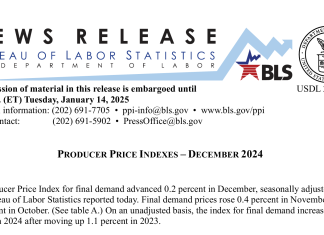
A standard perception of PPI is that it is a measure of "wholesale inflation", but the BLS told EconReporter that this interpretation of PPI is not at all correct.

Where are the endpoints of QT? Ample Reserve System vs Demand-driven Floor System
Quantitative tightening (QT)—a process central banks use to reverse years of liquidity creation from quantitative easing (QE)—is concluding in many advanced economies. The central banks are growing confident that reserve levels in their financial systems are nearing their endpoints.
Where are the endpoints of QT and what come next?

Economic benefit of asset market bubble
What the impact of asset price bubbles on US economic growth is.
Should Federal Reserve use scenario analysis to handle trade war uncertainty?
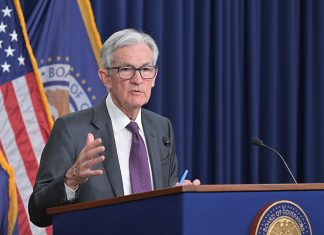
The Fed is currently in a "wait and see" mode in deciding what is the reaction to Trump's trade policy. But is it possible for the Fed to be a bit more proactive than merely saying "we will be able to update you further when we know more details"?
Enters scenario analysis.

Why Fed projects to cut rates next year even it expects failure to reach...
Inflation projections by Fed officials show that PCE inflation will not reach 2% by the end of 2025. Why the Fed expects to cut rate next year then?
Interviews
Why the Fed should Keep a Sizeable Balance Sheet? | Q&A with Jeremy...
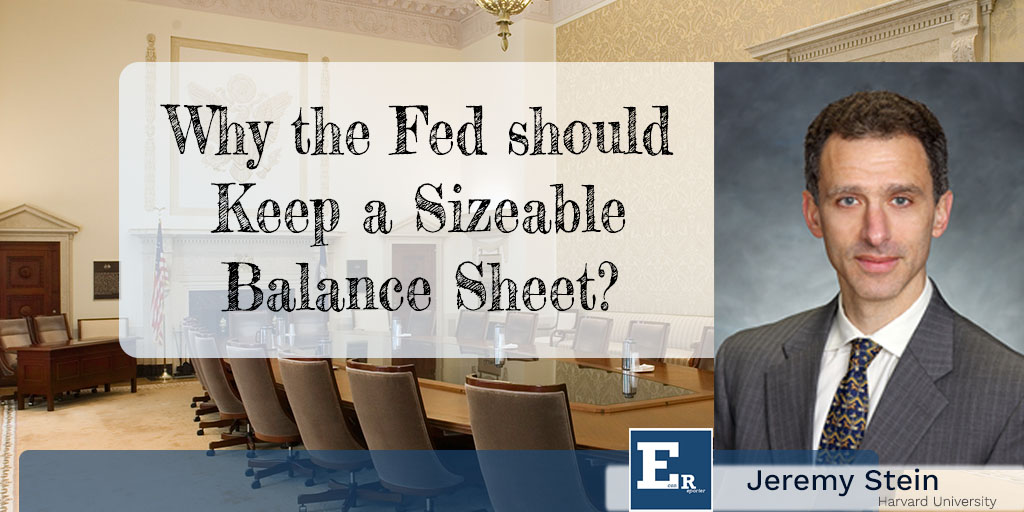
Jeremy Stein, former Federal Reserve governor, talks to us about his recent research “The Federal Reserve's Balance Sheet as a Financial-Stability Tool” and why the Fed should maintain a sizeable balance sheet.